600,000 U.S. jobs eliminated, saving $12.6 billion in three years! Robot armies march into factories
default / 2021-11-15
Amazon's job postings are taking the internet by storm. Keywords like 250,000 new positions, economic recovery, and win-win for humans and machines are popping up everywhere. But in the same week, a leaked document revealed that a wave of AI robots is replacing over 600,000 jobs. Outside, it’s a bustling hiring scene; inside, machines glow with cold light. In an era where efficiency is a religion, even the term "automation" has been quietly renamed.
The two most dramatic types of news in this era actually emerged on the same day:
One reads "Amazon to hire 250,000 more people in the U.S."; the other says "Amazon plans to replace 600,000 jobs with robots."
The former was announced at a press conference, while the latter was hidden in a leaked document.
"Hiring" and "firing" are just results of calculations.
And Amazon is the first to write that code.
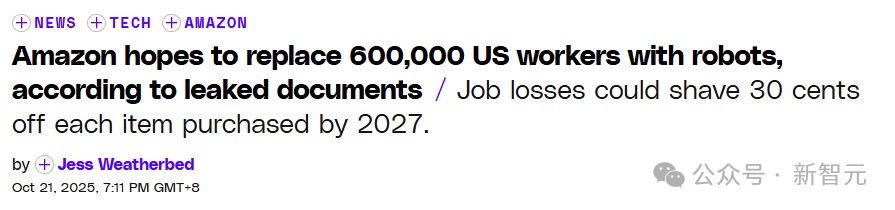
Amazon’s Dual Script: Hiring Spree and Job Elimination
Just a few days ago, Amazon made a high-profile announcement: it will hire 250,000 more people in the U.S. for this holiday season.
The press release was filled with optimistic terms: job opportunities, economic recovery, and new positions blooming everywhere.
But a leaked document obtained by The New York Times revealed another side: Amazon is planning to replace over 600,000 jobs with robots.
The document states that by 2033, the company aims to achieve 75% operational automation in the U.S.—doubling sales without adding new human resources.
Even by 2027, Amazon could reduce hiring needs by approximately 160,000 positions.
This is not a traditional layoff, but a "futuristic disappearance"—as if those jobs never existed.
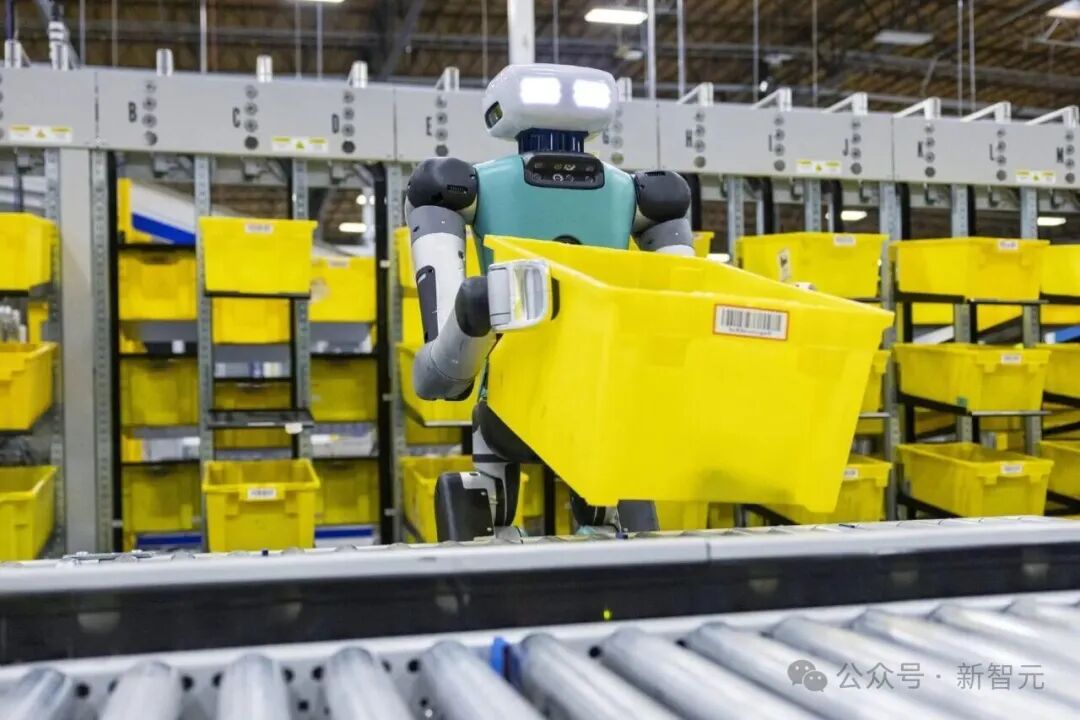
In Amazon’s warehouses, over one million robots are now at work. From the early Kiva handling system to today’s bipedal, bending-and-picking Digit, human figures are being replaced by algorithms and robotic arms.
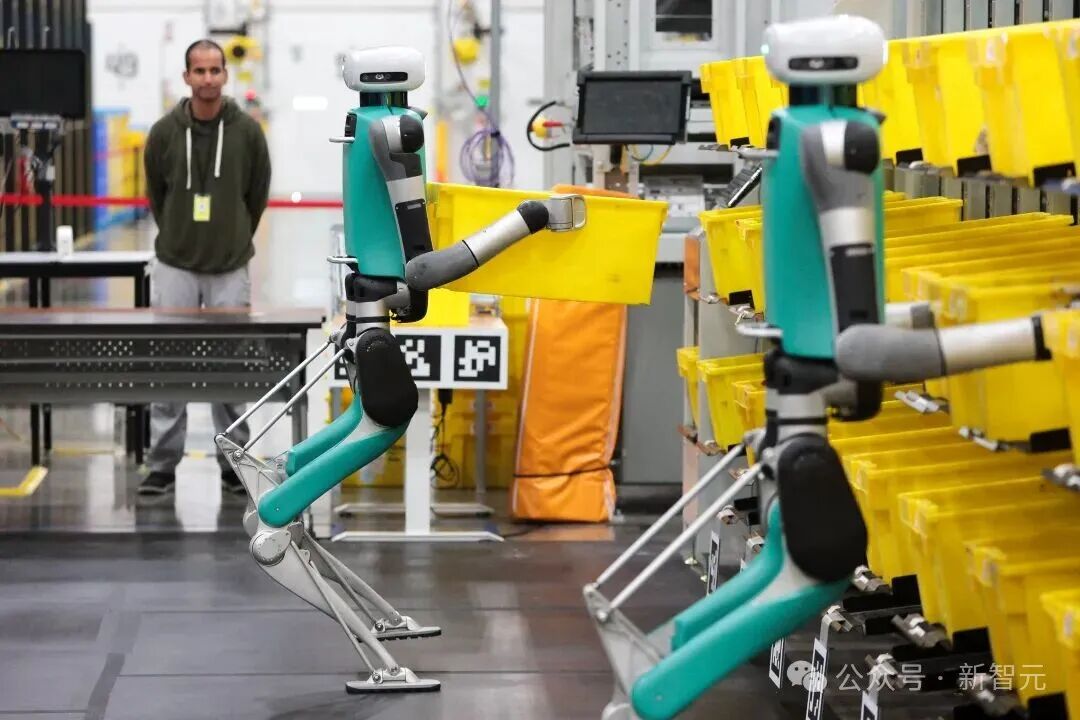
Company executives have even referred to these robots as "the future of the workforce."
For enterprises, this is a victory for efficiency; but for workers, it means they don’t even qualify to be laid off.
More practically, this automation revolution will allow Amazon to save approximately $0.30 per item, amounting to a cumulative savings of $12.6 billion over three years.
There is no sorrow in the robots’ algorithms—only improved profit margins.
Nobel laureate in Economics Daron Acemoglu stated in an interview:
Once Amazon finds a profitable way to automate, other companies will follow suit. By then, America’s largest employer will also become the biggest "job cutter."
Thus, what the outside world sees is a flood of "job postings"; yet in internal documents, there’s a countdown to "human redundancy."
Amazon is using the narrative of "employment boom" to mask the essence of a machine revolution.
"AI" as a forbidden term: Amazon’s language whitewashing
There’s another more subtle instruction in the document.
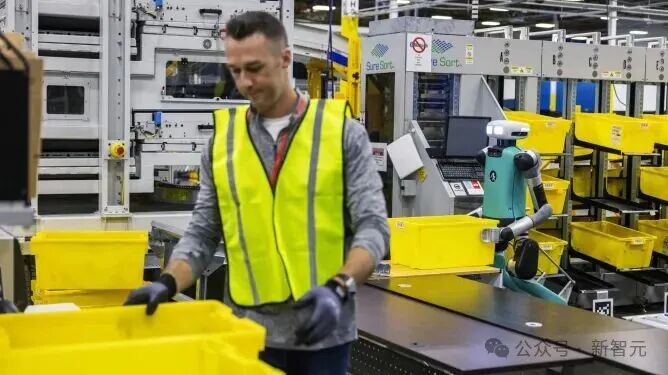
Amazon’s public relations team has required that terms like "automation" and "AI (artificial intelligence)" should be avoided in internal communications to prevent public anxiety.
Instead, softer-sounding phrases such as "advanced technology" and "cobot (collaborative robot)" are to be used.
Because in their view, language can determine the intensity of fear.
AI implies replacement, automation sounds like unemployment, while collaborative robots sound like joint progress between humans and machines.
According to verification by multiple media outlets, such wording is no coincidence.
Amazon’s "Corporate Communications and Community Relations Team" also proposed that in the future, efforts should be made to improve public perception of technological replacement through community public welfare projects, employee training programs, and other means.
The company has no intention of stopping automation; it just wants to make automation sound less terrifying.
This is undoubtedly a public relations battle at the linguistic level. When AI is called "advanced technology," and layoffs are packaged as "efficiency optimization," the entry of machines no longer seems glaring, and the exit of humans no longer appears sorrowful.
In response to external doubts, Amazon spokesperson Kelly Nantel stated in an interview:
These leaked documents only represent the perspective of a certain team and do not reflect the company’s overall recruitment strategy. We are still actively hiring and plan to add 250,000 new positions nationwide.
From a public relations perspective, this response almost perfectly confirms the thinking in the documents—not denying automation, but describing it in a more decent language.
Thus, the first thing automation replaces is not human workers, but the word "automation" itself.
Saving 30 cents, but losing 600,000 jobs
The moment you click "Place Order" on Amazon, an invisible calculation starts running.
Amazon estimates that with robots and automation systems, it can save approximately $0.30 per item, totaling $12.6 billion in savings from 2025 to 2027.
By 2032, robotic automation will save Amazon $16 billion annually in operating costs.
These figures reveal a cruel logic: when 30 cents can be saved per item, and when replacing jobs with robots to improve efficiency becomes a quantifiable goal, the value of labor, time, and even humans themselves begins to be marginalized.
From a corporate perspective, this is an inevitable choice for profit margins.
But from the perspective of workers and society, it means that human labor is being transformed into fragmented cost variables by algorithms.
As the proportion of automation at Amazon rises, a package that originally required dozens of minutes of manual work may only need a few minutes of robot operation. What is saved is not the electricity bill for the robots, but humans’ right to "get things done with their hands."
When cheaper, faster, and more efficient become the new standards in the retail world, both prices and the dignity of work may be compressed together.
Recent reports from the American Federation of Labor point out that warehouse automation is becoming a source of a new round of structural unemployment, with the substitution effect being increasingly evident, especially among people with low to medium education levels.
The cost of cheapness is no longer just the price of goods, but the social labor safety net as a whole.
After unmanned warehouses comes an unmanned society
Logistics warehouses are just the starting point.
In Amazon’s experiments, robots are responsible for picking, packing, and labeling; algorithms plan routes; programs predict demand.
When all links can be predicted, replaced, and optimized, "humans" become the most unstable variable in the system.
The aftershocks of this automation revolution are spreading from warehouses to a broader world.
Data from the U.S. Bureau of Labor Statistics shows that warehousing and delivery are among the fastest-growing blue-collar jobs in the past decade, absorbing a large number of low- and middle-income workers.
But once Amazon’s automation path proves profitable, it will become a template for the entire industry.
Logistics companies, manufacturing enterprises, and even retail terminals will follow suit. By then, what will disappear is not 600,000 jobs, but an entire type of work.
Economist Daron Acemoglu warns:
No company has more incentive than Amazon to find a profitable way to automate. Once it succeeds, this trend will spread to all industries.
This means that once automation becomes the mainstream logic, the labor market will no longer be human-centered.
Algorithms allocate resources based on efficiency, capital distributes power based on returns, and society is quietly undergoing a "dehumanized" restructuring.
What is more subtle is the change in consumers.
We enjoy faster logistics and lower prices, yet with every click, we are voting to acquiesce in the reduction of human labor.
"Cheaper" and "fairer" stand opposed.
In this system, machines do not get tired or protest.
They only execute orders until the world becomes like them: efficient, calm, precise, but increasingly depopulated.
Amazon is just a pioneer. After it, countless companies are learning the same algorithm: how to "optimize humans out."
Starting from warehouses, automation is spreading outward along the supply chain, eventually reaching every corner domesticated by efficiency.
The world of machines is getting brighter and brighter, while human existence is retreating from the center of the stage to the shadows.
Perhaps there will be no "unemployment" in the future. It’s just that we will all be placed outside the system.